Showing posts with label לימודי חול. Show all posts

Saturday, 18 October 2014

Heart and Mind

So, yet another topic from Jonathan Haidt's book "The Righteous Mind". Although, I think the psychological insights the book has to offer are really great, there are some parts that I thought were a bit weaker. In particular, let's look at the conclusion about Reason vs. Emotion derived from the studies in Chapter 2.

Three Approaches


David Hume
Haidt builds for us a 3-way model based on Great Thinkers and their thoughts on the interaction between "Mind and Heart".

    1. He begins with David Hume(An Enquiry Concerning the Principals of Morals, 1777) "reason is, and ought to be, the slave of the passions, and can never pretend to any other office than to serve and obey them."
    2. On the other end of the spectrum is Plato(Timaeus), which Haidt paraphrases as "The passions are and ought only to be the servants of reason, to reverse Hume's formulation."
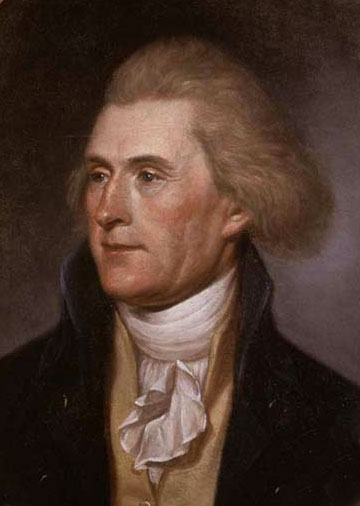
    3. Finally, Thomas Jefferson, presents a more balanced approach in a letter to Maria Cosway, which Haidt summarizes as "reason and sentiment are(and ought to be) independent co-rulers."

Having set up this three-way model, Haidt then describes his Psychological studies. Based on his Harmless Taboo interviews, he concludes:

"These results support Hume, not Jefferson or Plato. People make moral judgements quickly and emotionally.  Moral reasoning was mostly just a post hoc search for reasons to justify the judgments people had already made."

The Limits of Science


Ignoring the hubris to think that one is going to resolve one of the great philosophical debates of all time with some well thought-out psychology interviews, what Haidt is breezing over is his assumption that "are" and "ought to be" are one and the same. That may be true, according to his own secular materialistic philosophy, but many people would disagree. The Torah perspective, certainly, is that we have free will and must strive for an ideal which is often hard to achieve fully in practice.


This brings us to a topic that we've touched on before: the limits of Science. The scientific method is great at determining "what is". On the other hand, it's a rather weak tool in determining "what ought to be". Philosophy, on the other hand, with it's own methodology, is much better at this. In fact, the Plato and Hume quotes above are chiefly concerned with this question. Plato feels the need to argue for more intellect because he is acutely aware that people often make bad decisions from following their hearts without thinking rationally. Even in the Hume quote above, which explicitly mentions what is, his major point is not that, in practice, people follow their hearts, rather it is his assertion that doing so is a good thing.

In Defense of Rationalism


Thomas Jefferson
There's another point in favor of the intellect that Haidt never makes, that I'd like to touch on. It may be true that, when confronted with various stimuli, we generally follow the quick judgements of the intuitive part of our brain, rather than engaging in a long process of rational thought. It also seems likely that Haidt is right that this is necessary, since there is usually not enough time to consider the all the possibilities rationally before we act.

But that doesn't make it true, as Haidt asserts, that the intellect is of secondary importance. How is it, as we grow and develop, that our intuitions become such efficient decisors? It is not merely our raw experience which teaches our intuition those lessons. That experience must be filtered through the scrutiny our our intellect, reflecting on past experience and drawing non-trivial conclusions. Only then can we convert experience into learning. As such, I much prefer Jefferson's model. Intellect and Intuition are co-rulers, whose interaction produced the wonderfully dichotomous intelligence that is Man.

Monday, 6 October 2014

Haidt and the Psychology of Purity Laws

Having made it through the first two of three sections of Jonathan Haidt's "The Righteous Mind", let's take another look at what he has to say about "Purity Laws"(I should just mention that Professor Roberts recommended that I check out Haid's approach to this topic). We'll start with a summary of Haidt's more general thesis.

Intuition vs. Rationalism

Diagram of Haidt's model from the book

In the first section "Intuitions Come First, Strategic Reasoning Second", Haidt builds a Biological/Psychological model for Human decision making. He divides our mind's function into two parts: the intuitive/emotional part("The Elephant") and the rational/verbal part("The Rider"). He argues that, when confronted with a stimulus, the intuitive part of our mind responds first, within a fraction of a second, with a snap judgement. The rational part of our mind uses this judgement as a starting point, seeking to justify the judgement with reason.

Haidt ultimately posits that "The Elephant" is more important than "The Rider" because it's initial intuitions are almost always accepted in the end. The exceptions to this rule occur sometimes when we are exposed to others with differing opinions or, more rarely, due to independent rational introspection.


Moral Cognitive Modules


So how do our brains produce those intuitions. Haidt argues that, with regard to moral questions, our brains contain six Cognitive Modules that produce a moral intuitive response:

  1. Care/harm
  2. Fairness/cheating
  3. Liberty/oppression
  4. Loyalty/betrayal
  5. Authority/subversion
  6. Sanctity/degradation

Different cultures rely on these modules in different ways and to differing degrees. Haidt focuses largely on the Right vs. Left political divide in the US(liberals rely primarily on Care, Fairness while Conservatives have a more even balance), though he gives examples from other cultures by citing anthropological studies.

Evolutionary Psychology of Purity Laws


Indian Caste System
In Chapter 7, part 5, Haidt discusses the relation of these models to what he calls "Purity Laws". These can take many forms such as Food Taboos(like Kashrut or the various trends of Vegetarianism and Health Food) or social norms(like the Indian caste system). Haidt argues that we have this module because it gives people various evolutionary advantages. He gives a number of reasons for why this is so, but the one that most interests me as a religious Jew is what he calls, at one point, the "rally round the flag" effect.

In Chapter 5, Haidt describes his theory on the moral theme of Divinity, part of the Sanctity/degradation module:

"Our theory, in brief, was that the human mind automatically perceives a kind of vertical dimension of social space, running from God or moral perfection at the top down through angels, humans, other animals, or perfect evil, at the bottom...it seems to be a kind of archetype or innately prepared idea"

Haidt points out that this common belief, found in one form or another in so many different cultures, unites people into moral communities. This allows Humans to work together in a way that is not seen among primates, and contributes to Humans being what Haidt describes as "90% chimp and 10% bee". He argues that this combination of intelligence and tendency towards cooperation provided Humans with the ability they needed to spread out and conquer the globe over such a short period.

Taamei Hamitzvot


This brings us to mitzvot like Kashrut, burial rights, or even Tfillin. What is the reason behind these mitzvot? Some will offer mystical explanations(which I admittedly often have trouble relating to), but Haidt's observations suggest another answer. These mitzvot psychologically reinforce the innate notion that we are holy beings, a maxim that the Torah states explicitly from the very beginning:

וַיֹּאמֶר אֱלֹהִים נַעֲשֶׂה אָדָם בְּצַלְמֵנוּ כִּדְמוּתֵנוּ וְיִרְדּוּ בִדְגַת הַיָּם וּבְעוֹף הַשָּׁמַיִם וּבַבְּהֵמָה וּבְכָל הָאָרֶץ וּבְכָל הָרֶמֶשׂ הָרֹמֵשׂ עַל הָאָרֶץ: וַיִּבְרָא אֱלֹהִים אֶת הָאָדָם בְּצַלְמוֹ בְּצֶלֶם אֱלֹהִים בָּרָא אֹתוֹ זָכָר וּנְקֵבָה בָּרָא אֹתָם: (בראשית א' כ"ו-כ"ז)

Man's stature as ruler over the land and all it's creatures follows from his being created in the image of God i.e. he is higher on the Divinity dimension.

Emphasizing this point in our daily lives through these mitzvot hopefully brings us to better behavior and greater yirat shamayim. This Divine origin also helps the Jewish people perform their function in the world from generation to generation by uniting us, as Haidt points out, into a single Moral Community--a community that has held together for the past three and a half millenia through a vast array of changing circumstances and surrounding cultures.

Sanctity/Degradation Redeemed


This idea of the Torah building on top of an innate instinct is not new. For example, Rav Soloveichik speaks about the Maternal instinct(presumably Haidt would categorize this under the Care/harm module) and how it is redeemed by Torah Motherhood:

"The mother is bound up with the child...Motherhood is an experience -- unredeemed and hence brutish...Sarah became the first mother in the sense that her motherhood stemmed not only from instinctual involvement due to biological pressure but from free commitment as well...Mother's job changed into a great mission; her preoccupation with the child was endowed with ethical meaning." (Rabbi Joseph B. Soloveichik, "Parenthood: Natural and Redeemed", Family Redeemed)

Mitzvot such as Kashrut that build on our innate Sanctity/Degradation module act to Redeem that instinct. It may be true, as Haidt suggests, that we evolved this module as protection from pathogens and as a way to help build cooperative communities. But when we treat our body as a temple, eating only animals that the Torah has labeled טהורה and avoiding those it called טמאה, then we have elevated this instinct to be an essential part of our ethical development and our service to the Creator.

Tuesday, 23 September 2014

Haidt on Taboos


So, with Rav Aharon’s mandate to approach the Humanities from a religious perspective, let’s take a look at the book “The Righteous Mind”, by Social Psychologist, Jonathan Haidt.


Chapter 1: Where does Morality come from?


The first chapter of the book “Where does Morality come from?” deals with that self-same question. Haidt describes how the Psychology Academia came to reject the Nativist and Empiricist models for Moral Development(Nature vs. Nurture) in favor of the Rationalist approach i.e. that children learn Morality by themselves through trial and error, expanding on the basic principal that “harm is wrong”. He brings Psychologists Elliot Turiel and Lawrence Kohlberg as epitomizing this viewpoint.

This approach initially did not sit well with Haidt because it seemed “too cerebral” a description of children’s experience of morality. He also points out that, while this thesis could explain moral development in Liberal Western societies, it doesn’t work as well in other cultures. He brings “purity laws” such as the Torah prohibition on eating “Shratzim”, as a counter-example to the idea that all morality stems from harm.

Haidt concludes the chapter describing his own research on how people respond to the question of right or wrong with regard to hypothetical “Harmless Taboo Violations” i.e. A family’s dog was killed so they decided to cook it and eat it, siblings commit incest but use birth control, a man commits bestiality with a dead animal, etc. While upper class Western subjects tend to see these cases merely as the violation of a subjective social convention, lower class subjects in the third world tend to identify them as moral violations. As such, Haidt concludes that the Rationalist model is does not sufficiently explain the evidence and a new model is needed.


Food Taboos and Harm


I would like to take a look at Haidt’s point about Kashrut laws. Is it true that such taboos are not about harm?

Mitzvot have two aspects: on one hand they have a Taam, a rationale behind the commandment, on the other hand they are “Decrees of the King” and must be followed regardless of the reasoning.

Haidt’s statement about food taboos is clearly directed towards this first aspect. The reason behind food taboos is open for debate, but it doesn’t seem to be because of harm(some claim that kashrut is because of health reasons, but the support for this thesis is rather tenuous. For a good discussion of the reasons behind Kashrut, see Rav Meir Soloveichik's article "Locusts, Giraffes, and the Meaning of Kashrut".) If, however, we look at the second aspect to mitzvoth, that they are the King’s commandment, then they do take on an element of harm. To violate these taboos is to disobey our father in Heaven, thus harming our relationship with him and desecrating his name in the world.

That said, Haidt’s point holds. Food Taboos are not only about harm, they also have other reasons behind them. Personally, I would have liked to see data on how responses to Haidt’s “Harmless Taboo Violations” correlate to the religiosity of his subjects. Perhaps the different results in countries/socioeconomic status could be explained by the religiosity of his subjects. If so, then his results doesn’t really tell us much about developmental psychology, they merely tells us that religion effects our moral sense, which is seemingly a truism. Then again, perhaps it's a truism that, as Haidt himself suggests, Liberal Western academics really need to be reminded of. That said, it could be that Haidt is starting out his book with a bit of a straw-man to build credibility. We'll see in subsequent chapters...

Wednesday, 20 August 2014

The Humanities: a Contemporary Challenge

In his 1988 lecture "The End of Learning"("Leaves of Faith" Vol. 1), Rav Aharon discusses the value of learning the Humanities as a Torah Jew, specifically addressing the common claim that the Sciences are "both safer and more rewarding." It's well worth the read, being still very much relevant today , but the major arguments are:
  •  Quoting Milton, "The end, then, of learning is...possessing our souls of true virtue"
    • Knowlege of the world is "both illuminating and ennobling" and the "apex of that world" is Humanity in general and the Human Spirit in particular. "The study of man as spirit is, however, what the humanities are all about."
  • The Torah Scholar should value the Humanities because "humanistic culture does not merely elucidate language but inculcates it's proper use. Narrow education often entails paucity of expression, and, correspondingly, of thought."
  • The Humanities introduce us "in Arnold's celebrated phrase, to 'the best which has been thought and said in the world'"
  • The study of history helps us fulfill the command "to contemplate the ways of Providence, in fulfillment of the mandate זְכֹר יְמוֹת עוֹלָם בִּינוּ שְׁנוֹת דּוֹר וָדוֹר שְׁאַל אָבִיךָ וְיַגֵּדְךָ זְקֵנֶיךָ וְיֹאמְרוּ לָךְ.
  • They help us to craft a better world: "tikkun of the antechamber proper"

A Contemporary Challenge


Rav Lichtenstein's article refers briefly at the end to some of the practical challenges to implementing this approach. I'd like to focus on one such challenge in particular.

The Humanities in the Post-War Era have undergone a significant re-alignment, resulting in a sizable rift between new and old approaches. D. G. Meyers contrasts these approaches, with a somewhat resentful eye to the latter, with a rather colorful formulation:


“I, again, am a dinosaur in believing in Human Greatness and learning from those who are greater than we. It’s certainly what informed my teaching. I was stupid enough, or behind-hand enough, to believe that the writers I taught had something to say to us. Which is why we should study them. Not to expose the sins of racism and colonialism, but cause they’re wiser and, my God, smarter than we are.”

On the one hand, we have the approach of the old guard, whose goal is to learn from the Great Thinkers of the past. On the other hand, there is the newer school, which believes that Humanity’s next great challenge is to conquer racism and bigotry, and seeks to achieve this goal by pointing out their lasting influence on our culture. So there's a clear different of focus between the two schools.

Rav Aharon's approach falls solidly into the realm of the Old Guard. As such, the contemporary student of the Humanities has a considerable challenge ahead of him, if he hopes to implement this approach. He will find himself going against the grain of most of his teachers, who belong to the New School. Even if their methodologies are similar, these two groups have very different opinions as to what sort of research questions are considered interesting and what models are used in answering those questions. How well can one expect to do on a paper whose questions, as well as answers, clash with the Professor's whole Academic approach?