Tuesday, 25 November 2014

Definitions and the Passing-On of Tuma


The second shiur in Rav Daniel Wolf’s מנחה טהורה is on the classes of methods by which objects become tamei. The Rav offers 3 options:

1. Hagdara


The object is defined by the Torah as a source of tuma.

The classic example of this are all the avot hatuma defined in the torah: a dead body, a sheretz met, etc.

2. Haavara


Tuma was passed from one object to another.

The classic examples are the basic methods of passing on tuma: a person touching a sheretz met, for example.

3. Hachlala


A less common type of tuma. Here, the tuma is passed by association. The object becomes part of the same whole as the tamei object and thereby becomes Tamei, even though there wasn’t a formal Haavara.

Rav Wolf brings a number of examples, some more clear-cut than other: There’s the mishna in Taharot 1:9 where pure food becomes connected to food that is rishon and it also becomes rishon. Also, kelim that become tamei from being inside Ohel Hamet may be in this category.

Which class is it?


So there are the clear-cut cases, but then there are also the unclear ones. Much of this chapter in the book is dedicated to the unclear ones, and there are also references to later chapters where this chakira arises in other cases.

One of the clear-cut cases of Haavara that Rav Wolf mentions is a person who touches a dead body, Avi Avot Hatuma, and becomes tamei at the level of Av Hatuma. It seems clear enough: the person touches a dead body and the Tumat Met transfers to them at a lower level.

Cherev Kechalal: a simulation
And yet, I wonder if it’s really that simple. Rav Wolf discusses Cherev Kechalal and points out that it isn’t clear whether we’re dealing with Haavara or Hagdara. Is the sword tamei because it absorbed the tuma from the dead body, or is it a new source of Tumat Met, one that belongs to the weapon that struck the blow?

It seems to me that we could ask the same question about a person who touched a dead body. Did they absorb the existing tuma, or is there something in the experience of coming in such close physical contact with a corpse that creates a new source of Tumat Met?

Admittedly, it’s a bit of a chiddush to say that we can have Tumat met that doesn’t pass directly from the dead body. Then again, that’s essentially what Rav Wolf is saying about Cherev Chalal so I don’t see a big difference. That said, I’m still just getting into these sugiot, so maybe I’m missing something…

Monday, 24 November 2014

Pshat and Drash


The idea of midrash(aggadah) has always bothered me a bit. The main problem is the subjectivity of it all. Unlike other realms of Torah Learning, such as Halacha, or studies of chumash that focus on pshat, the rules for Midrash are not well defined and the standard of proof is minimal. To sharpen the question, are we really learning Hashem’s Torah when engaging in such subjective study—it seems more like we are learning whatever message we choose to overlay on the scripture?

And yet, the Torah literature contains tons of books of Midrash, containing drashot from all of our favorite Tanaitic and Amoritic halachists. So what is the deal?

On Reading the Bible as Literature


In answering this question, I’ll just point out that, in addition to the Torah’s halachic role, it has a much broader role of providing us spiritual and moral guidance. As such, Hashem want us to read the Torah and seek meaning in it, even in the case where one cannot prove objectively that one’s exegesis is the definitive one.

This is technically similar to how we read general literature, searching for meaning, symbolism, and insights into the Human experience. That said, we clearly relate to God-given literature differently than that written by Man. Ultimately, I think that one has to conclude that Hashem has given us, the Jewish people, a good deal of responsibility with regard to interpreting his Torah—and here we are obligated to darshan responsibly.

Just looking at the current Sidra. The meanings behind the stories of of our forefathers are anything but explicit. Certainly there are many hints at meaning, but for every tefach revealed, another two seem to be concealed. It is certainly helpful to read mefarshim—midrashei chazal, rishonim, and acharonim, and certain themes do tend to repeat themselves, yet in many cases, it is hard to prefer one explanation over another based on purely textual grounds.

Even the Brisker methodology with its synthesis of induction and deduction, is hard to apply to Tanach. In Halacha, there is a system and an assumption of conceptual consistency within that system. In scripture, this assumption is much weaker since one pasuk may teach us one lesson while the following one focuses on another(Rav Mordechai Breuer’s תורת הבחינות epitomizes this problem, arguing that different parshiot or even psukim can teach opposing lessons as an expression of Hashem’s different names/midot). When learning Tanach, we are often left with only the induction but with no strong deduction to support it i.e. Midrash.

The popularization of pshat-focused learning is certainly a response to this subjectivity. They bring a more scientific approach to parshanut by focusing on the objective portions of Tanach study. Certainly, there is a good deal to be learned from this approach and I don’t mean to detract from that. That said, at some point analysis of pshat runs up against a wall in the face of inherent ambiguity and drash is the only tool that can take our understanding further.

Toldot-Vayeitz-Vayishlach


That said, let’s take a look at some of the action in recent parshiot hashavua. We’ll start with a few difficult points that yell to the reader “Darsheni”:

  1. The prophecy says about Yaakov and Easav ורב יעבוד צעיר. Yet we never get to see this. How is this prophecy fulfilled?
  2. Yaakov buys the בכורה, then in next week’s parsha he must marry the בכירה before he can marry the צעירה. He also has to work 7 years for each.
  3. Upon returning from Padan-Aram, Yaakov first encounters angels, about which little is said, and then must fight a mysterious איש. He is then called Yisrael because שרית עם אלהים ועם אנשים ותוכל. What is the significance of these events?

Originally there were supposed to be two complementary roles as expressed by ורב יעבוד צעיר. Easav was meant to provide physical sustenance while Yaakov was to provide spiritual guidance. Together, they were to form the nation of Israel.

This plan goes awry at the selling of the Bechora. Easav couldn’t even provide for himself, much less the both of them. Not only that, but Yaakov, rather than providing him with spiritual guidance, convinces him to give up the בחורה and thus his role in the family.

When it comes time for Yaakov to marry, he must work hard for his bride but is then tricked into marrying her older sister first. The message here is clear: you took Easav’s role from him, you must first fulfill that responsibility before you can start fulfilling your own role(This may also be a punishment for pushing Easav away rather than bringing him back to the right path.)

Yaakov was already fitting for his role as spiritual leader, as is show with is nondescript encounter with the angels, but is he really able to take on Easav’s physical role? Ultimately, he must show his physical prowess against the איש to obtain the name Israel. Only once he proves that he can deal, not only with אלוהים but with אנשים is he ready to be the sole father of the nation of Israel.

Modern Midrash


Note that this sort of explanation is similar to classic Midrash(actually, it’s inspired by Rav Huna’s statement in Midrash Rabba ורב יעבוד צעיר-אם זכה יעבֹד ואם לאו יעבד). It goes beyond the simple pshat to attribute a thread of meaning to the events of the parsha. Note also that it offers very little proof of its correctness. Unlike a Halachik Chakira that ties several sources together, there is no rigid system that demands these events are related. One could claim that because they are part of the same story of Yaakov and Easav they are thematically connected, but this assumption is by no means binding.

So ultimately, where does this leave me with regard to Midrash? I guess I’m still concerned with its subjectivity, but its strong results certainly speak in favor of the method despite its caveats.

(One final note: it may be that I'm defining Midrashic methodology too narrowly here. Rashi insists several times that his goal is to focus on the pshat, by which he means to focus on midrashei Chazal that are consistent with the pshat. The implication is that there are other midrashim that are less consistent with the pshat. My original question, then, still would apply to these. The only answer I have to offer in this case is the insight that I once heard Rav Ezra Bick point out about chassidic tales--even if they aren't Factual, they may still be True...)

Thursday, 20 November 2014

Adam Smith and Judicial Categories


So we had previously discussed the question of why the Gemara in Sanhedrin considers Theft and Damages(גזילות וחבלות) to be a separate category from Admissions and Loans(הודאות והלוות).

Rav Marcus gave two possible reasons then:
  1. Theft and Damages usually involve violence or threat of violence, while Admissions and Loans usually involve trickery or misunderstanding
  2. Theft and Damages started with an illicit act, while Admissions and Loans start with a perfectly legal arrangement and only become a problem later on
I'd like to suggest some other possible answers(I actually made a previous attempt at this, which to my mind wasn't very successful), but to get there we'll need to take a detour to the 18th century in the still young United Kingdom...

Adam Smith on Robbery and Contracts


Vernon Smith’s recently discussed Adam Smith’s “The Theory of Moral Sentiments” on Econtalk. One of his points was Smith's theory of the relative severity of different legal categories:

Vernon: And he also points out that, in that development, that theft and robbery carry a greater punishment than a violation of promises. In other words, contracts. And he says, Why? He says, because robbery and theft take from us what we have already acquired. Violation of contract merely frustrates our expectation of gain. Okay? And he says that's different. And indeed, theft and robbery are criminal offenses. Violation of contract are only civil offenses. You can get redress, of course, but they are considered less serious. And he gets that from another fundamental proposition in Adam Smith, and that's the asymmetry between gains and losses.

Russ: It's incredible.

Guest: He says, we suffer, and I can tell you this one almost verbatim: He says, 'We suffer more when we fall from a better to a worse state than we ever gain when we arise from a worse to a better.' And he goes on, explains this, that it's loss of fortune, of reputation, of esteem. I mean, it isn't just money and fortune. He mentions, as I recall, three other things, but they have to do with our rank, our status

Russ: People don't pay as much attention to us. And that's a huge factor for Smith.

Guest: Yes. And we will be very careful to avoid that. And so this notion of the asymmetry between gains and losses is not only clearly stated more than one place in Adam Smith, but it's actually used to derive some of his results.

Smith distinguishes between theft and contract violation based on the severity of suffering imposed on the victim:
  • Theft takes away what a person has—diminishing their status, which has a profound effect on a person socially/psychologically
  • Violations of contract take away expected gains—also no fun, but at least the person’s current status is preserved

We can formulate a similar distinction with regard to our Sugya, focused on the effect on the victim:

  • Theft and Damages- take away what a person has, causing them great suffering
  • Admissions and Loans- take away property they expected to gain or, in the case of loans, money that they regarded to some degree as “extra” because they were willing to loan it out at zero interest as the Torah proscribes. This presumably causes them a lesser degree of suffering.

An Anthropological Explanation


So this is an interesting distinction, but I think we can delve a bit deeper. There is something just more basic about cases of Theft and Damages than Admissions and Loans(and Theft vs. Contract Violations too, for that matter). Here I'd like to draw on a distinction Professor Roberts makes in his book "How Adam Smith Can Change Your Life":

Before Einstein discovered relativity, before Rodin sculpted The Burghers of Calais, before the Eiffel Tower and the Chrysler Building, before Brutus of Troy founded Lon­don, before the first human being realized you could plant a seed and wait for it to grow, before the ambition deep within us caused all these changes in the human condition, we were, it appears, hunters and gatherers in small bands and clans. Subsistence was the most one could hope for, and it was not easy to achieve. Life was fragile; death came early and often.
In such a world, how we interacted with those around us made the difference between life  and death. There was no insurance company to insure your spear. There was no government to provide disability payments if you broke your leg chasing dinner. People must have leaned  heavily on each other. Trust was essential. Failure to chip in, to help out, to do your share must have been punished relentlessly and cheaply, through shame and anger the first time, but eventually with expulsion and exile if such behavior contin­ued. Every family, every extended family, and maybe every band and clan shared what they had with each other out of necessity.

The point is that some of our societal rules are conventions that evolved to cooperate better as part of human culture. To put it bluntly, a young child, or even an ape, understands the concept of Theft and Damages. One individual takes something from another or hits another--we understand that as wrong institutionally at the most basic of levels.

Admissions and Loans, on the other hand, are another story. Our child or primate would be hard put indeed to understand the obligatory power behind a verbal commitment or the obligation to return a loan once it's been given. As Jonathan Haidt's quote of primate expert Michael Tomasello goes:

It is inconceivable that you would ever see two chimpanzees carrying a log together.

Our unique Human ability to cooperate with one another by means of complex social conversions is something that belongs more to the realm of Culture than to the realm of Instinct(though Haidt argues there is also an innate component). Admissions and Loans belong to this category. Theft and Damages are a more basic part of our psychology, that because they are wrong in a more universal sense.

Monday, 3 November 2014

Passing On Tuma

Let's back-up and look at the first chakira in מנחה טהורה. Tuma can be passed from object to object, starting with an Av Hatuma and progressing through various levels of Vlad Hatuma. For instance:
  1.  a Sheretz Met is an av hatuma
  2. A kli that touches it can become rishon
  3. Food that is put in the kli becomes sheni
  4. Truma that touches the food becomes shlishi
  5. Kodshim that touch the Truma becomes revii

Rav Wolf points out that there are two ways two understand this passage of Tuma from object to object:

1. Tuma Weakens as it is Passed On


Tuma weakens as it is passed on. The various categories of Av and Vlad hatuma represent the current strength of the Tuma.


2. Avot and Toldot


Only avot pass on tuma. Toldot are tamei but cannot pass it on. Truma/Kodshim become pasul but not tamei. Rav Aharon Lichtenstein suggests this explanation based on the Gemara in Bava Kama(ב.) that compares levels of tuma with Avot and Toldot from Melachot Shabbat(שיעורי הרא"ל טהרות עמ' 85). 

Difficulties with Both


Rav Wolf ultimately points out a number of difficulties with both explanations. For instance, if Tuma weakens as it is passed on, then why the distinction between Avot and Toldot? On the other hand, if only avot pass on Tuma, then how can we understand חרב כחלל where Av status is passed on to the kli?

In any case, I wanted to bring-up this chakira now since it is so basic and will no doubt be relevant in numerous places in the future.

Tuesday, 28 October 2014

Purity and Man

Well, I think it's time I picked up מנחה טהורה, Rav Daniel Wolf's book on Seder Taharot...

The Centrality of Man in Severity of Tumah


One interesting point Rav Wolf makes in the opening chapter is about the pattern in how Tuma is passed between objects, with a decreasing severity the further they get from Mankind:

נראה כי ההסבר לדיני העברת הטומאה מבוסס על השקפה שלפיה האדם הוא מרכז עולם הטהרות. לפיכך, דברים מקבלים טומאה על פי מידת קרבתם לאדם ומעמדם כמשמשיו.

As such, the greatest level of Tuma is a dead body, while at the other end of the spectrum, objects that belong to nature cannot become impure:

  1. A Person can become Av Hatuma in life or Avi Avot Hatuma(Rashi's term) in death
  2. A metal kli, which requires a high technological level to make, can also become Avi Avot Hatuma
  3. Ohel, Moshav, and Mishkav serve Man so they can become an Av
  4. Other Kelim can become an Av depending on how closely they serve Man
  5. Earthen Kelim "serve the servants of Man" i.e. hold food and water. Therefore they can't become an Av
  6. Food Serves sometimes serves man directly, sometimes through a kli, so it can become, at best, Rishon
  7. Drink only serves man though a kli, so there is a machloket whether they can become Tamei. The Rambam says that only the 7 important liquids can mideoraita.

 A Lesson in Mindfulness?


The laws of Tumah and Taharah create an aura of respect and awe around the service of God. They raise the bar on our avoda of bringing Korbanot, Trumah, and visiting the Temple Mount.

At the same time, I wonder if there is a broader moral lesson here. We are taught to keep track of the purity/impurity of our bodies, our creations, and even our food. Perhaps this mindfulness, this consciousness of purity in the service of God, are meant to spill over to our broader pursuits, ultimately touching on the realm of טומאת הנפש.

Purifying the Impure


Continuing on in Mincha Tehora, Rav Wolf points out a similar pattern with regards to purifying Tamei items. The closer they are to Man, the easier they are to purify. As Rav Wolf describes it, "החמור בטומאה הוא קל בטהרה":

  1. Avot Hatuma are purified in a Mikva
  2. Earthen Kelim are purified only once broken
  3. Food is purified by making it inedible
  4. Impure drinks cannot be purified

This somewhat counter-intuitive result has interesting implications. It seems that the laws of טומאה וטהרה put everything on an axis of Man vs. Nature. That which is closer to Man falls under our realm of responsibility to keep pure or to purify, while that which is Natural is outside our sphere of influence.

Saturday, 18 October 2014

Heart and Mind

So, yet another topic from Jonathan Haidt's book "The Righteous Mind". Although, I think the psychological insights the book has to offer are really great, there are some parts that I thought were a bit weaker. In particular, let's look at the conclusion about Reason vs. Emotion derived from the studies in Chapter 2.

Three Approaches


David Hume
Haidt builds for us a 3-way model based on Great Thinkers and their thoughts on the interaction between "Mind and Heart".

    1. He begins with David Hume(An Enquiry Concerning the Principals of Morals, 1777) "reason is, and ought to be, the slave of the passions, and can never pretend to any other office than to serve and obey them."
    2. On the other end of the spectrum is Plato(Timaeus), which Haidt paraphrases as "The passions are and ought only to be the servants of reason, to reverse Hume's formulation."
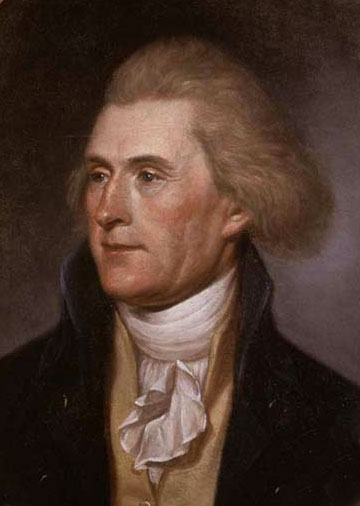
    3. Finally, Thomas Jefferson, presents a more balanced approach in a letter to Maria Cosway, which Haidt summarizes as "reason and sentiment are(and ought to be) independent co-rulers."

Having set up this three-way model, Haidt then describes his Psychological studies. Based on his Harmless Taboo interviews, he concludes:

"These results support Hume, not Jefferson or Plato. People make moral judgements quickly and emotionally.  Moral reasoning was mostly just a post hoc search for reasons to justify the judgments people had already made."

The Limits of Science


Ignoring the hubris to think that one is going to resolve one of the great philosophical debates of all time with some well thought-out psychology interviews, what Haidt is breezing over is his assumption that "are" and "ought to be" are one and the same. That may be true, according to his own secular materialistic philosophy, but many people would disagree. The Torah perspective, certainly, is that we have free will and must strive for an ideal which is often hard to achieve fully in practice.


This brings us to a topic that we've touched on before: the limits of Science. The scientific method is great at determining "what is". On the other hand, it's a rather weak tool in determining "what ought to be". Philosophy, on the other hand, with it's own methodology, is much better at this. In fact, the Plato and Hume quotes above are chiefly concerned with this question. Plato feels the need to argue for more intellect because he is acutely aware that people often make bad decisions from following their hearts without thinking rationally. Even in the Hume quote above, which explicitly mentions what is, his major point is not that, in practice, people follow their hearts, rather it is his assertion that doing so is a good thing.

In Defense of Rationalism


Thomas Jefferson
There's another point in favor of the intellect that Haidt never makes, that I'd like to touch on. It may be true that, when confronted with various stimuli, we generally follow the quick judgements of the intuitive part of our brain, rather than engaging in a long process of rational thought. It also seems likely that Haidt is right that this is necessary, since there is usually not enough time to consider the all the possibilities rationally before we act.

But that doesn't make it true, as Haidt asserts, that the intellect is of secondary importance. How is it, as we grow and develop, that our intuitions become such efficient decisors? It is not merely our raw experience which teaches our intuition those lessons. That experience must be filtered through the scrutiny our our intellect, reflecting on past experience and drawing non-trivial conclusions. Only then can we convert experience into learning. As such, I much prefer Jefferson's model. Intellect and Intuition are co-rulers, whose interaction produced the wonderfully dichotomous intelligence that is Man.

Monday, 6 October 2014

Haidt and the Psychology of Purity Laws

Having made it through the first two of three sections of Jonathan Haidt's "The Righteous Mind", let's take another look at what he has to say about "Purity Laws"(I should just mention that Professor Roberts recommended that I check out Haid's approach to this topic). We'll start with a summary of Haidt's more general thesis.

Intuition vs. Rationalism

Diagram of Haidt's model from the book

In the first section "Intuitions Come First, Strategic Reasoning Second", Haidt builds a Biological/Psychological model for Human decision making. He divides our mind's function into two parts: the intuitive/emotional part("The Elephant") and the rational/verbal part("The Rider"). He argues that, when confronted with a stimulus, the intuitive part of our mind responds first, within a fraction of a second, with a snap judgement. The rational part of our mind uses this judgement as a starting point, seeking to justify the judgement with reason.

Haidt ultimately posits that "The Elephant" is more important than "The Rider" because it's initial intuitions are almost always accepted in the end. The exceptions to this rule occur sometimes when we are exposed to others with differing opinions or, more rarely, due to independent rational introspection.


Moral Cognitive Modules


So how do our brains produce those intuitions. Haidt argues that, with regard to moral questions, our brains contain six Cognitive Modules that produce a moral intuitive response:

  1. Care/harm
  2. Fairness/cheating
  3. Liberty/oppression
  4. Loyalty/betrayal
  5. Authority/subversion
  6. Sanctity/degradation

Different cultures rely on these modules in different ways and to differing degrees. Haidt focuses largely on the Right vs. Left political divide in the US(liberals rely primarily on Care, Fairness while Conservatives have a more even balance), though he gives examples from other cultures by citing anthropological studies.

Evolutionary Psychology of Purity Laws


Indian Caste System
In Chapter 7, part 5, Haidt discusses the relation of these models to what he calls "Purity Laws". These can take many forms such as Food Taboos(like Kashrut or the various trends of Vegetarianism and Health Food) or social norms(like the Indian caste system). Haidt argues that we have this module because it gives people various evolutionary advantages. He gives a number of reasons for why this is so, but the one that most interests me as a religious Jew is what he calls, at one point, the "rally round the flag" effect.

In Chapter 5, Haidt describes his theory on the moral theme of Divinity, part of the Sanctity/degradation module:

"Our theory, in brief, was that the human mind automatically perceives a kind of vertical dimension of social space, running from God or moral perfection at the top down through angels, humans, other animals, or perfect evil, at the bottom...it seems to be a kind of archetype or innately prepared idea"

Haidt points out that this common belief, found in one form or another in so many different cultures, unites people into moral communities. This allows Humans to work together in a way that is not seen among primates, and contributes to Humans being what Haidt describes as "90% chimp and 10% bee". He argues that this combination of intelligence and tendency towards cooperation provided Humans with the ability they needed to spread out and conquer the globe over such a short period.

Taamei Hamitzvot


This brings us to mitzvot like Kashrut, burial rights, or even Tfillin. What is the reason behind these mitzvot? Some will offer mystical explanations(which I admittedly often have trouble relating to), but Haidt's observations suggest another answer. These mitzvot psychologically reinforce the innate notion that we are holy beings, a maxim that the Torah states explicitly from the very beginning:

וַיֹּאמֶר אֱלֹהִים נַעֲשֶׂה אָדָם בְּצַלְמֵנוּ כִּדְמוּתֵנוּ וְיִרְדּוּ בִדְגַת הַיָּם וּבְעוֹף הַשָּׁמַיִם וּבַבְּהֵמָה וּבְכָל הָאָרֶץ וּבְכָל הָרֶמֶשׂ הָרֹמֵשׂ עַל הָאָרֶץ: וַיִּבְרָא אֱלֹהִים אֶת הָאָדָם בְּצַלְמוֹ בְּצֶלֶם אֱלֹהִים בָּרָא אֹתוֹ זָכָר וּנְקֵבָה בָּרָא אֹתָם: (בראשית א' כ"ו-כ"ז)

Man's stature as ruler over the land and all it's creatures follows from his being created in the image of God i.e. he is higher on the Divinity dimension.

Emphasizing this point in our daily lives through these mitzvot hopefully brings us to better behavior and greater yirat shamayim. This Divine origin also helps the Jewish people perform their function in the world from generation to generation by uniting us, as Haidt points out, into a single Moral Community--a community that has held together for the past three and a half millenia through a vast array of changing circumstances and surrounding cultures.

Sanctity/Degradation Redeemed


This idea of the Torah building on top of an innate instinct is not new. For example, Rav Soloveichik speaks about the Maternal instinct(presumably Haidt would categorize this under the Care/harm module) and how it is redeemed by Torah Motherhood:

"The mother is bound up with the child...Motherhood is an experience -- unredeemed and hence brutish...Sarah became the first mother in the sense that her motherhood stemmed not only from instinctual involvement due to biological pressure but from free commitment as well...Mother's job changed into a great mission; her preoccupation with the child was endowed with ethical meaning." (Rabbi Joseph B. Soloveichik, "Parenthood: Natural and Redeemed", Family Redeemed)

Mitzvot such as Kashrut that build on our innate Sanctity/Degradation module act to Redeem that instinct. It may be true, as Haidt suggests, that we evolved this module as protection from pathogens and as a way to help build cooperative communities. But when we treat our body as a temple, eating only animals that the Torah has labeled טהורה and avoiding those it called טמאה, then we have elevated this instinct to be an essential part of our ethical development and our service to the Creator.